- Get link
- X
- Other Apps
Alright, imagine you are building your dream home. You’re excited about the design, the colors, and where to put your gaming setup! But then, someone throws words like 'plinth area' at you, and suddenly, it feels like you’re in a math class. Don’t worry, I’ve got you! Let’s break it down in the simplest way possible.
What is Plinth Area?
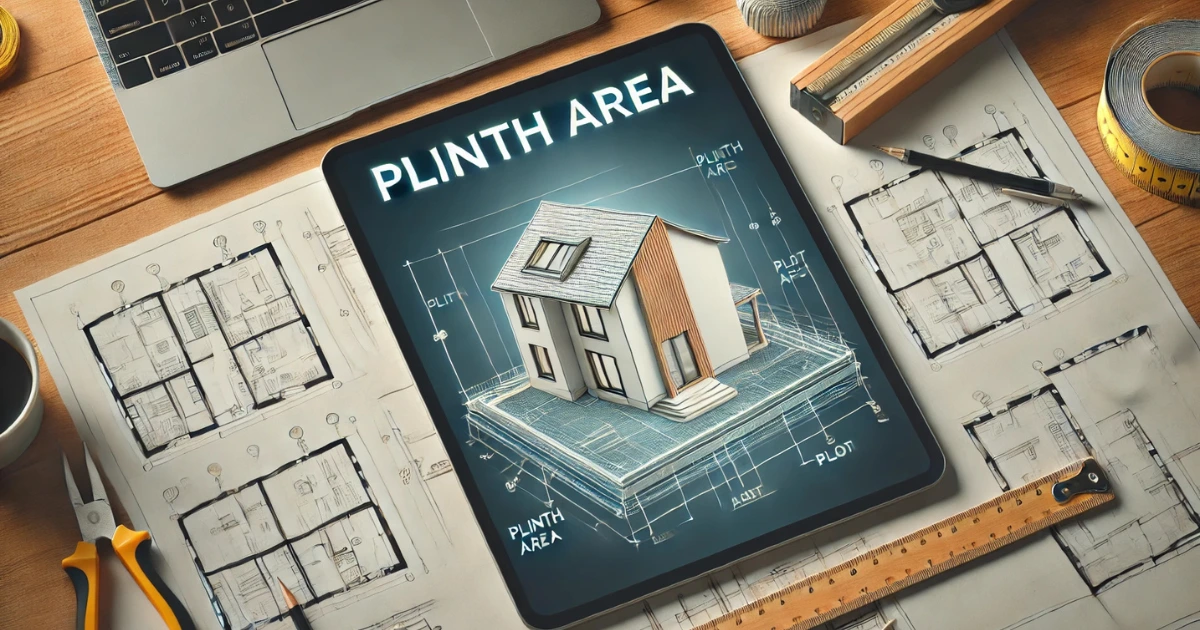
Let’s say your house is like a giant birthday cake (yum!). The plinth area is the base of that cake—the part that touches the plate. In construction terms, it’s the total built-up area covered by your house, measured at the floor level, including internal and external walls but NOT open spaces like balconies or terraces. So, if your house was a box, the plinth area would be the area that the bottom of the box covers.
Why Should You Care About the Plinth Area?
Well, if you’re planning to build a house, understanding plinth area helps in:
- Estimating construction costs (nobody likes unexpected expenses!)
- Planning smarter so you don’t waste space
- Getting approvals from local authorities
Plinth Area vs Carpet Area: The Not-So-Epic Battle
Now, you might have heard about 'carpet area' too. What's the difference?
- Carpet Area – The actual usable area inside the house where you can lay a carpet. It does not include walls.
- Plinth Area – Includes walls, meaning it is bigger than the carpet area.
So, when someone tells you their house has a plinth area of 1000 sq. ft., you know the actual walking space inside will be lesser. Keep this in mind while checking out luxury property brochures!
How to Calculate Plinth Area?
It’s actually pretty easy! Here’s a simple way to do it:
- Measure the external dimensions of the house (length and width).
- Multiply the length by the width.
- Add the area covered by internal and external walls.
- Exclude open spaces like terraces and balconies.
For example, if your house is 30 feet long and 40 feet wide:
Plinth Area = (30 x 40) + Wall Thicknesses
Let’s say walls take up 10% of the space, so the final plinth area would be roughly 1200 sq. ft.
How Understanding Plinth Area Can Save You Money
Alright, now the fun part—saving money! If you understand plinth area, you can:
- Avoid overpaying for a property by knowing what part of the space you actually get to use.
- Plan smarter and cut down on unnecessary construction.
- Optimize materials and design to reduce costs.
Pro Tip:
Want to reduce costs? Consider designs that use fewer walls and open layouts. Not only does it make your home feel bigger, but it also reduces construction expenses!
Final Thoughts: Plan Smarter, Save More!
Plinth area might sound technical, but it’s really just a fancy way of saying ‘how much space your house covers on the ground’. Knowing this can help you save money, plan better, and avoid confusion while buying or building a home.
So next time someone talks about plinth area, you can confidently nod and say, "Oh yeah, I totally get that!" (and maybe impress them a little).
Got questions? Ask away in the comments below!
Connect with: Embassy Projects India
Comments
Post a Comment